Lab

K-Challenge Lab

  • K-Challenge is both SPORT with its Racing branch, but also TECH with its LAB section.

    K-Challenge Lab develops innovative technological solutions that are essential to ensuring the sporting performance of French teams at international level in the biggest crewed sailing competitions, including the prestigious America's Cup.

    These solutions and technological building blocks are ahead of the rest of the industry, which is inherent to high-tech sporting competition, a melting pot of cutting-edge technology and capable of experimentation in real-life situations.

    The challenge of these breakthrough innovations is to transpose them to uses other than sporting competition alone.


    Since its involvement in the 37th America's Cup in 2023, K-Challenge has sought to contribute in particular to the decarbonisation of mobility and thus to France's technological influence on the world stage.

    In this context, K-Challenge has obtained the support of the State:

    • High patronage of the President of the Republic
    • Subsidy from the Ministry of the Sea


    K-Challenge LAB, divided into several departments, is developing:

    • Real-time multi-fluid boat simulation software to optimise boat performance and design: Simulation Department
    • An operating system that integrates all smart ship systems and an autopilot: OS Department
    • ⁠Design studies for boats and appendages such as foils
    • ⁠Hydrogen gas and liquid propulsion solutions for boats under 30 metres: Hydrogen Department

    K-Challenge has demonstration boats in real-life situations:

    • an AC 40 and an AC75
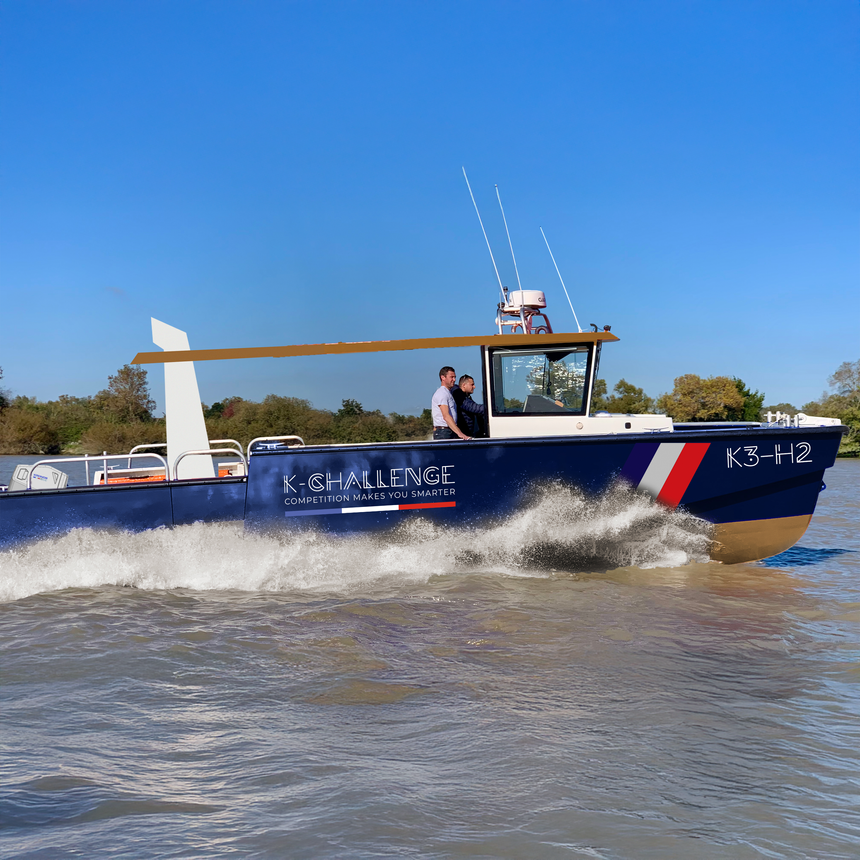
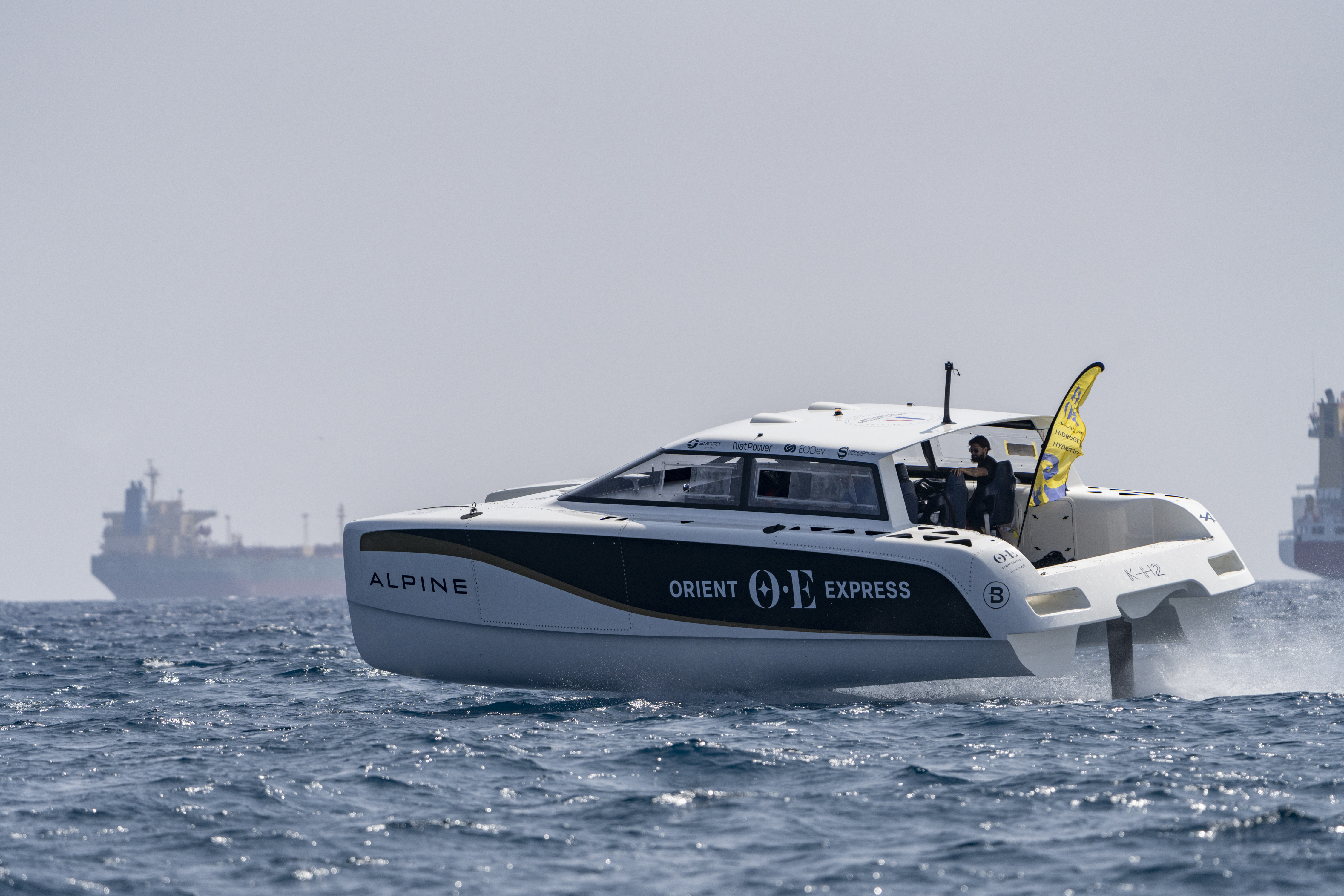
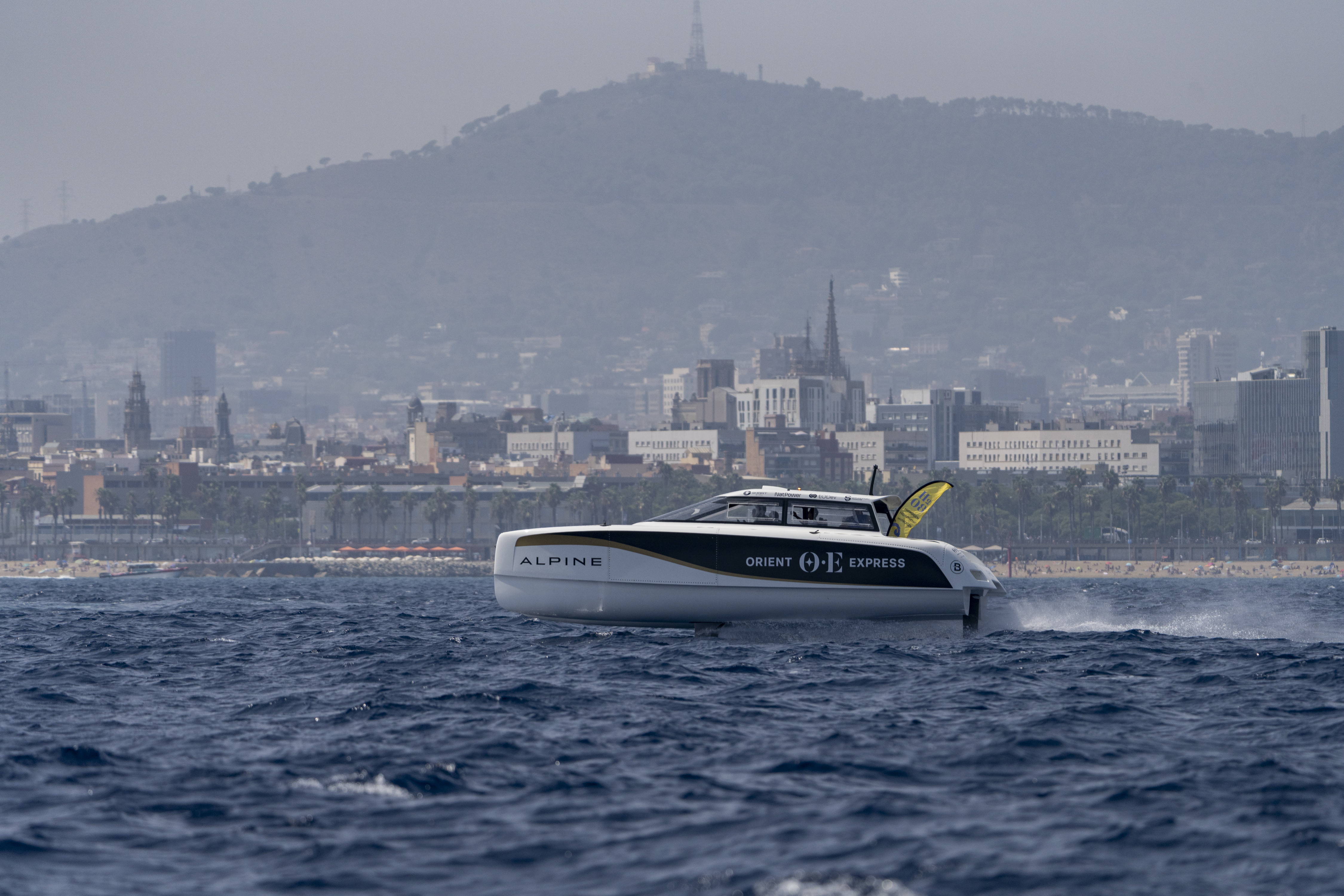
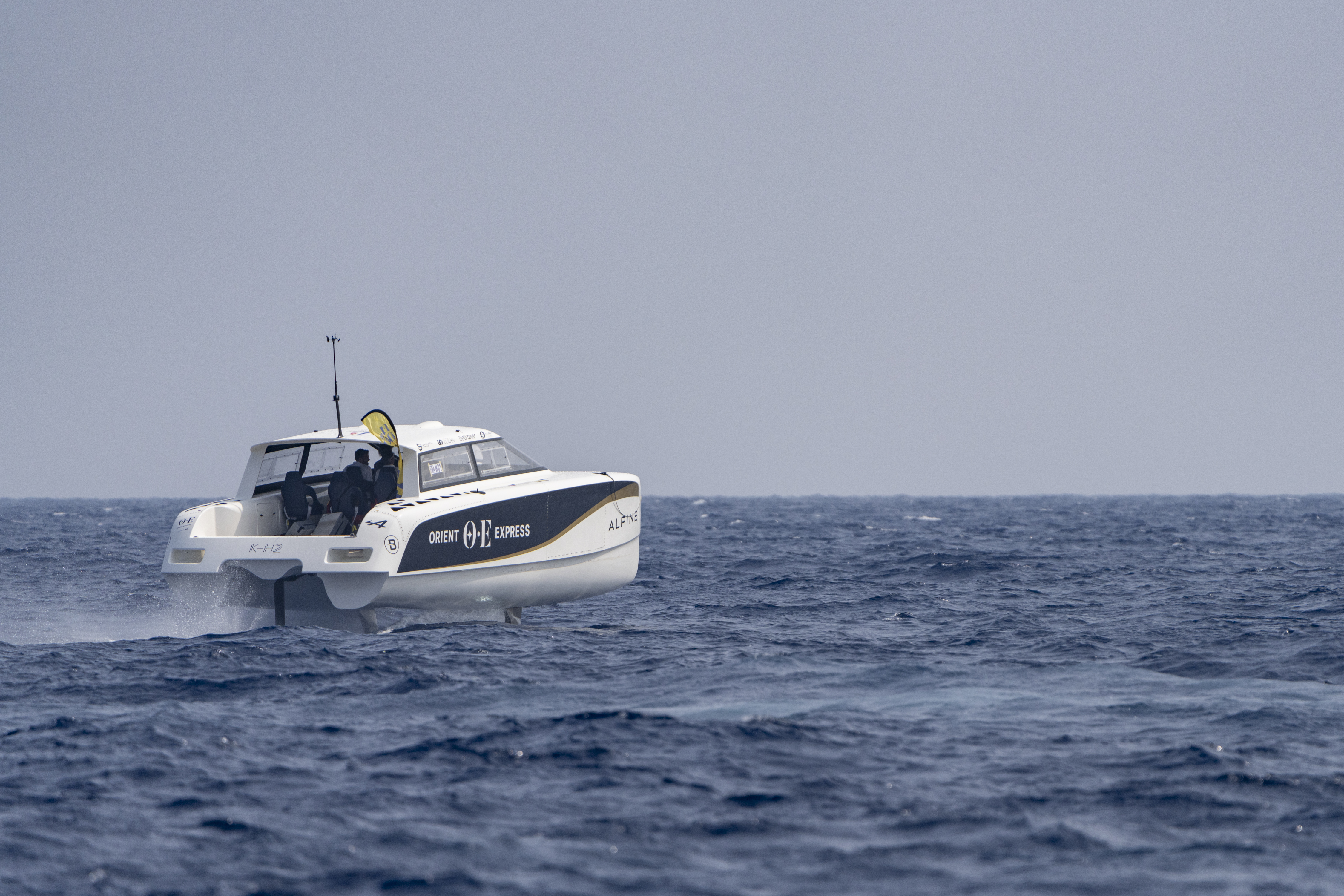
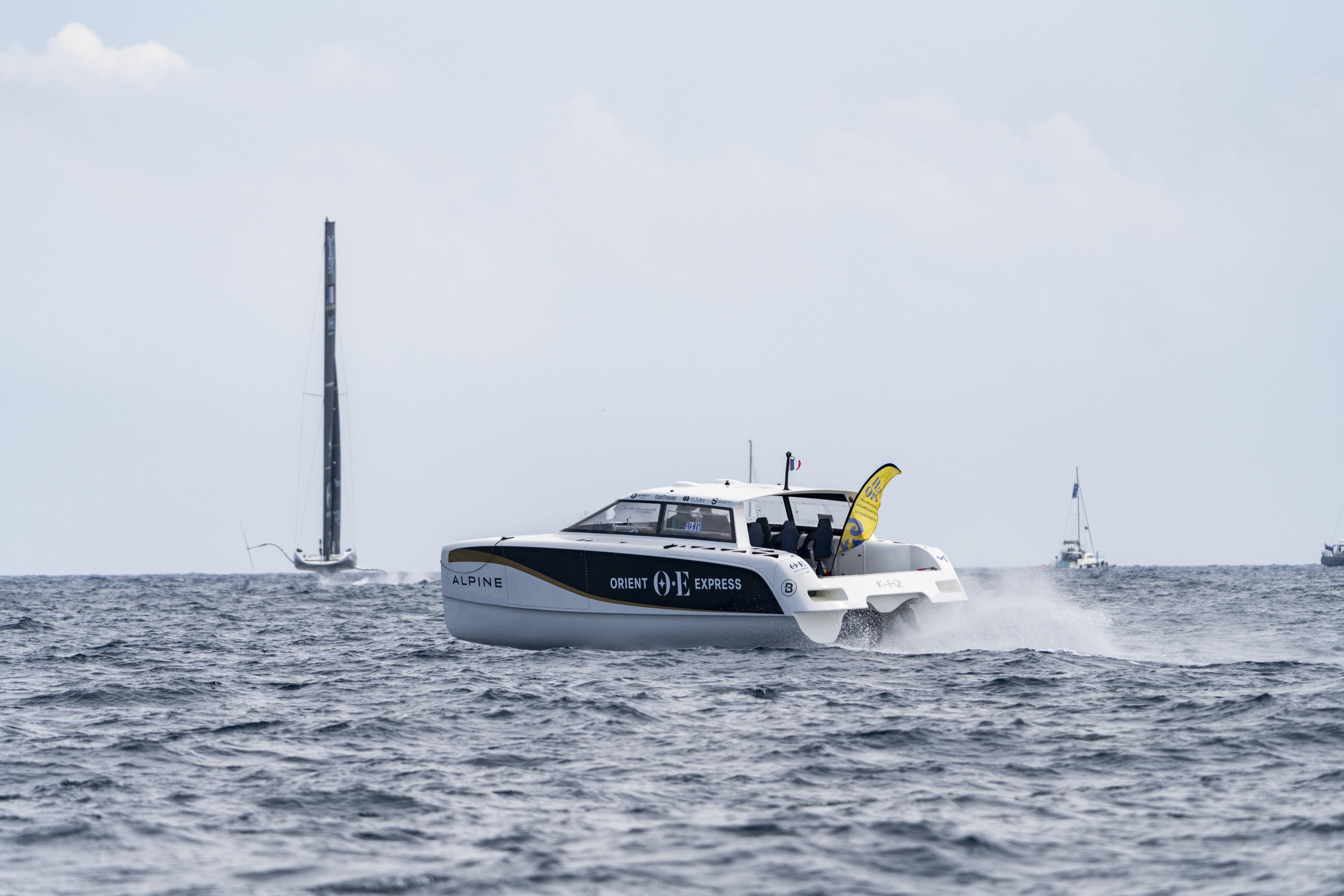
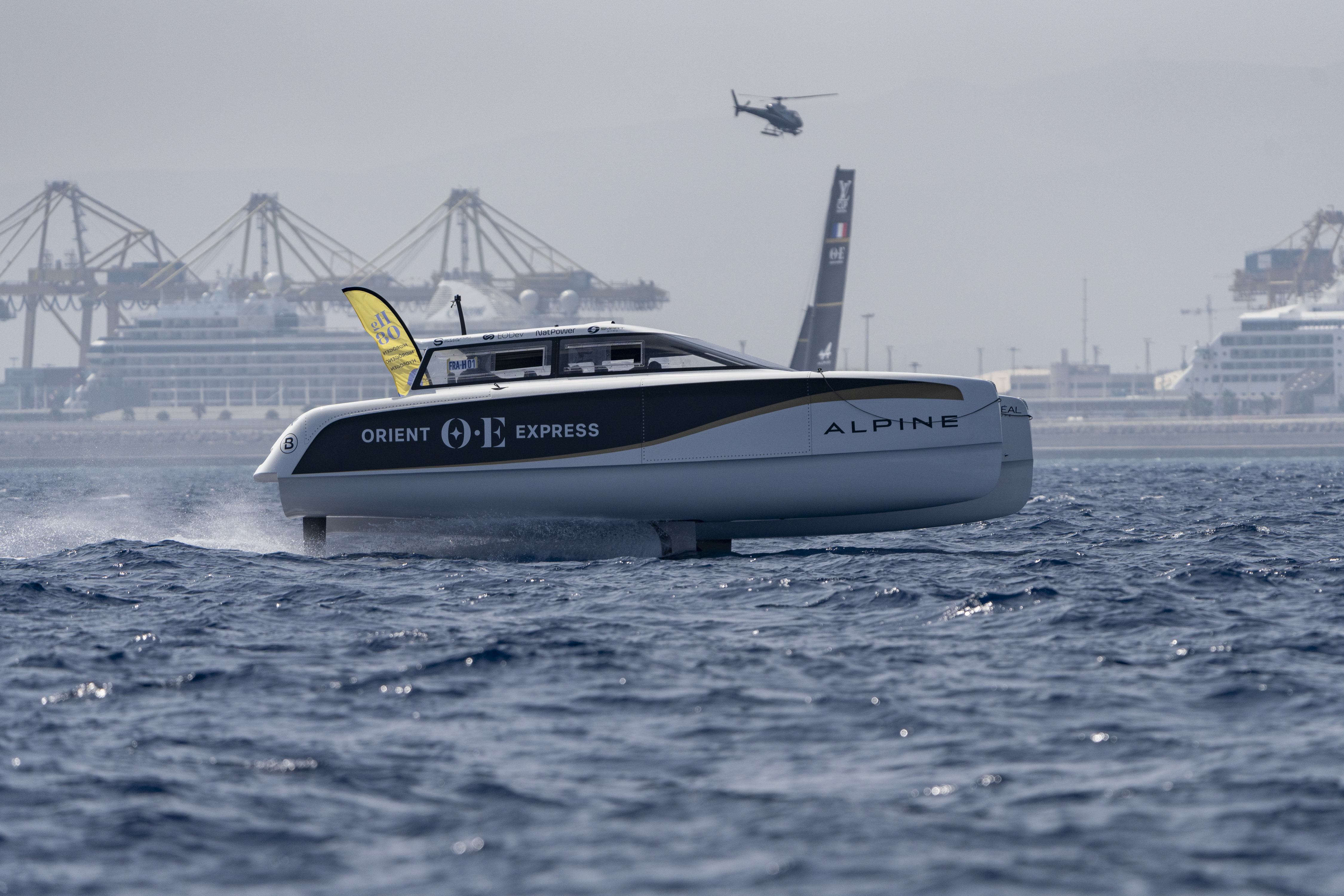
    • a unit powered by hydrogen, among other things - HSV H2
    • semi-rigid laboratories for implementing the hydrogen solution

Hydrogen solutions

Hydrogen solutions


In the beginning, a sporting rule

‘Competition makes you smarter,’ likes to repeat Stephan Kandler, founder and co-CEO of K-Challenge.

Competition pushes us to surpass ourselves and be creative.

Since its inception, the America's Cup has been an important technological incubator and the competition most synonymous with innovation.

The rules for the 2024 edition required teams to have only one type of assistance authorised in the racing area: a high-speed hydrogen-powered foiling boat (HSV).

This was a real technological challenge, in which K-Challenge participated through its subsidiary K-Challenge Lab, alongside a European consortium comprising the Italian shipyard Bluegame, the French architectural firm Philippe Briand and the French company EODev, a specialist in hydrogen.

K-Challenge Lab is ready to go even further in terms of the ecological transition of mobility by developing a version 2 that will be dedicated to the commercial markets for coastal motor boats under 30 metres.

ACT 1: The HSV, a high-speed hydrogen-powered foiling boat, version 1

To comply with the rules of the 37th America's Cup, each competitor had to have at least one fast flying boat, powered by 160 kW hydrogen fuel cells, capable of maintaining a cruising speed of 30 knots over a minimum of 150 nautical miles, while reaching a maximum speed of 50 knots for more than one hour of sailing during the day.

A European consortium

After months of studies conducted by experts, it was decided to develop a 33-foot (10-metre) hydrogen-powered catamaran, designed by French architect Philippe Briand, flying on hydrofoils, powered by two REXH2® engines from the French company EODev, coupled with three 63 kWh batteries and built by the Italian shipyard Bluegame.

‘We have partnered with a consortium that has been working with experts for months to meet these very specific specifications,’ says Stephan Kandler, before elaborating:

"There are several significant constraints to take into account. Firstly, the need to sail at high speeds for long periods of time; this requires performance that battery-powered boats are not capable of achieving, even on foiling catamarans, due to the weight and volume of the batteries. Hence the need for a combination of solutions and a hybrid system using hydrogen.

Furthermore, we know that the shape and total surface area of the hull in contact with the water is a key factor in terms of energy efficiency. Hence the catamaran. While drag is lower on a flying boat, we must not forget the Archimedean phase of take-off, which is very energy-intensive... »

In terms of energy, precisely?

"The boat's electric motors are powered by a hybrid energy source: on the one hand, a fuel cell, the REXH2 from EODev, and on the other, batteries. "

ACT 2: Democratising this technology on coastal transport vessels under 30 metres

In order to respond to a major challenge - the decarbonisation of transport in the maritime world - K-Challenge Lab is preparing for the future, drawing on data collected during the competition phase of the 37th America's Cup.

Data collection and French sovereignty

"The first HSV, a unique model in France, served as a laboratory vessel for K-Challenge. Its use during the competition was coupled with R&D work to model the boat, identify areas for improvement and set the parameters for future developments and innovations. With 28 days of sailing, our engineers and experts collected a wealth of valuable data.

K-Challenge Lab is one of the only companies in the world to possess this type of data. The other teams that own an HSV did not take this approach, with the possible exception of the New Zealanders.

In any case, we now possess French and sovereign expertise that is useful for maritime decarbonisation projects," explains Stephan Kandler.

Research & Development in partnership with Hopium

The teams at K-Challenge Lab and the French company Hopium have begun formalising an R&D programme to design a demonstration boat for a French hydrogen propulsion solution that can be implemented on board coastal transport vessels less than 30 metres in length:

  • A lighter, more compact, more efficient fuel cell, adapted for marine use and ready for mass production. Currently, the only options available are the Toyota fuel cell, which is not fully adapted for marine use, and a Canadian fuel cell adapted for marine use.
  • Integration on a semi-rigid boat as a demonstrator
  • Harmonisation of systems

The aim for the future is for these solutions to be usable for other purposes and other forms of transport.

The teams are working according to the following principles:

  • Speed
  • Technology transfer possible to other uses
  • H2 gas/H2 liquid compatibility
  • Pooling and economies of scale
  • R&D applied to specific cases
  • Simplicity and robustness

Simulation

The simulator, a technological weapon for athletes

Du Virtuel au Réel : Le Rôle du Simulateur | America's Cup


The simulator is one of the key elements in the technical arsenal of sailing teams. This tool, which has become indispensable, has seen a sharp increase in use over the last two decades.

Why?

From a sporting point of view, the simulator makes it possible to compensate for prohibitions or restrictions:

_limited number of sailing days in the rules laid down by the America's Cup Defender

_few competitions ahead of the qualifiers

It allows for training 24/7, whatever the weather conditions, which sometimes do not always allow for real sailing on board a foiler

A true performance tool, sailors spend hours on the simulator to master the fundamentals of sailing aboard the AC40 first, then the AC75. The correlation between the real and the virtual is impressive.

Taking control of the control panel, performing manoeuvres in real-life situations, analysing and repeating until perfection is achieved is part of the daily routine for these highly dedicated men and women.


From a technical and economic point of view:

The simulator has another significant advantage: it can be used as a laboratory, thus limiting physical and economic risks.

Implementing a system in software before installing it on the actual boat offers undeniable economic and technical advantages. As everything is virtual, crashing the boat is allowed and has no damaging consequences.


A 100% French tool

The simulator used by our teams was developed by:

Benjamin Muyl and his team at BMD Design - Loughlin Dudley, Nedeleg Bigi, Sébastien Nicolaïdis, Timothée Fonlupt

in collaboration with the K-Challenge teams - David Gautier, Céline Le Berre, Connor Banks, Gilles Toussaint, Valentin Salomez, Stéphane Jambon and Arthur Bois -


Events

  • Media ID-4335

    Navexpo (Lorient)

    NAVEXPO is the maritime innovation trade show for industry professionals. It will be held on May 20, 21, and 22, 2025, in Lorient. (Quai du Péristyle). The aim is to showcase the expertise and many innovations currently underway in the maritime sector, with exhibiting companies, conferences, and a dynamic exhibition “on the water, underwater, and in the air.” K-Challenge Lab will be present both with its hydrogen boat and through presentations (round tables).
    https://www.navexpo.com/fr/

  • Media ID-4321

    UNOC (Nice)

    Co-organized by the governments of France and Costa Rica, the third United Nations Ocean Conference (UNOC 3) will be held in Nice, France, from June 9 to 13, 2025.
    The main theme of UNOC 3 is “Accelerating action and mobilizing all actors to conserve and sustainably use the ocean.”
    The K-Challenge LAB teams will be present in Nice with the first-generation hydrogen boat and will use a demonstrator to showcase the progress of their work in the field of onboard hydrogen.

Partners

  • Media ID-4296

    A French manufacturer and CleanTech mobility company, Hopium brings together a team of experts at the forefront of innovation in the hydrogen fuel cell sector to meet the challenges of the energy transition.
    Find out more about the company: www.hopium.com

  • Media ID-4320

    EODev (Energy Observer Developments) is the result of unique experience gained aboard Energy Observer: the first clean energy autonomous hydrogen-powered vessel, developing innovative solutions for the environment. Founded in 2019, the company's mission is to accelerate the energy transition by offering sustainable, reliable, high-performance, and accessible industrial solutions.

    EODev is one of the world leaders in the design and industrialization of zero-emission electricity generation systems. Its range includes the GEH 2® electro-hydrogen generator for stationary and mobile applications, and the REXH 2® onboard generator for the maritime sector.